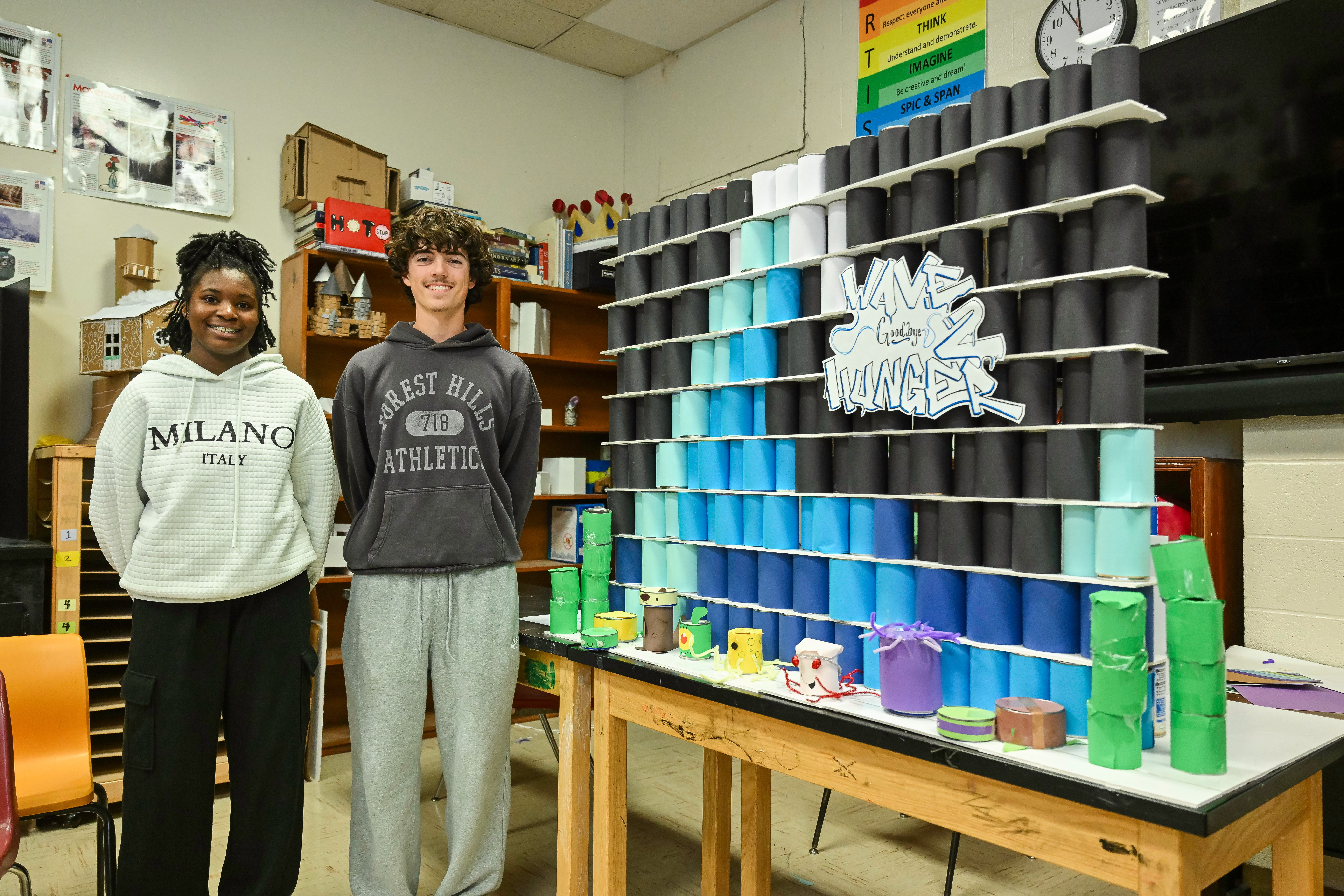
Students across Cabarrus County’s STEM schools recently put their problem-solving skills — and their creativity — to the test in a challenge that blended engineering with community impact.
Through a partnership between the Cabarrus County Education Foundation (CCEF), the nonprofit 1Can and Cabarrus County Schools’ STEM programs, the first-ever “STEM Builds the Future: 1 CAN at a Time” challenge invited students to collect canned food donations and transform them into large-scale structures, applying the engineering design process through planning, testing, redesign and collaboration.
There were no height or weight limits on the designs.
But the project extended beyond the classroom: all donated items will help stock Blessing Boxes across Cabarrus County through 1Can, providing food directly to families facing insecurity.
Participating schools included Coltrane-Webb, Patriots, R. Brown McAllister and W.M. Irvin elementary schools; C.C. Griffin and J.N. Fries middle schools; and Central Cabarrus and Northwest Cabarrus high schools.
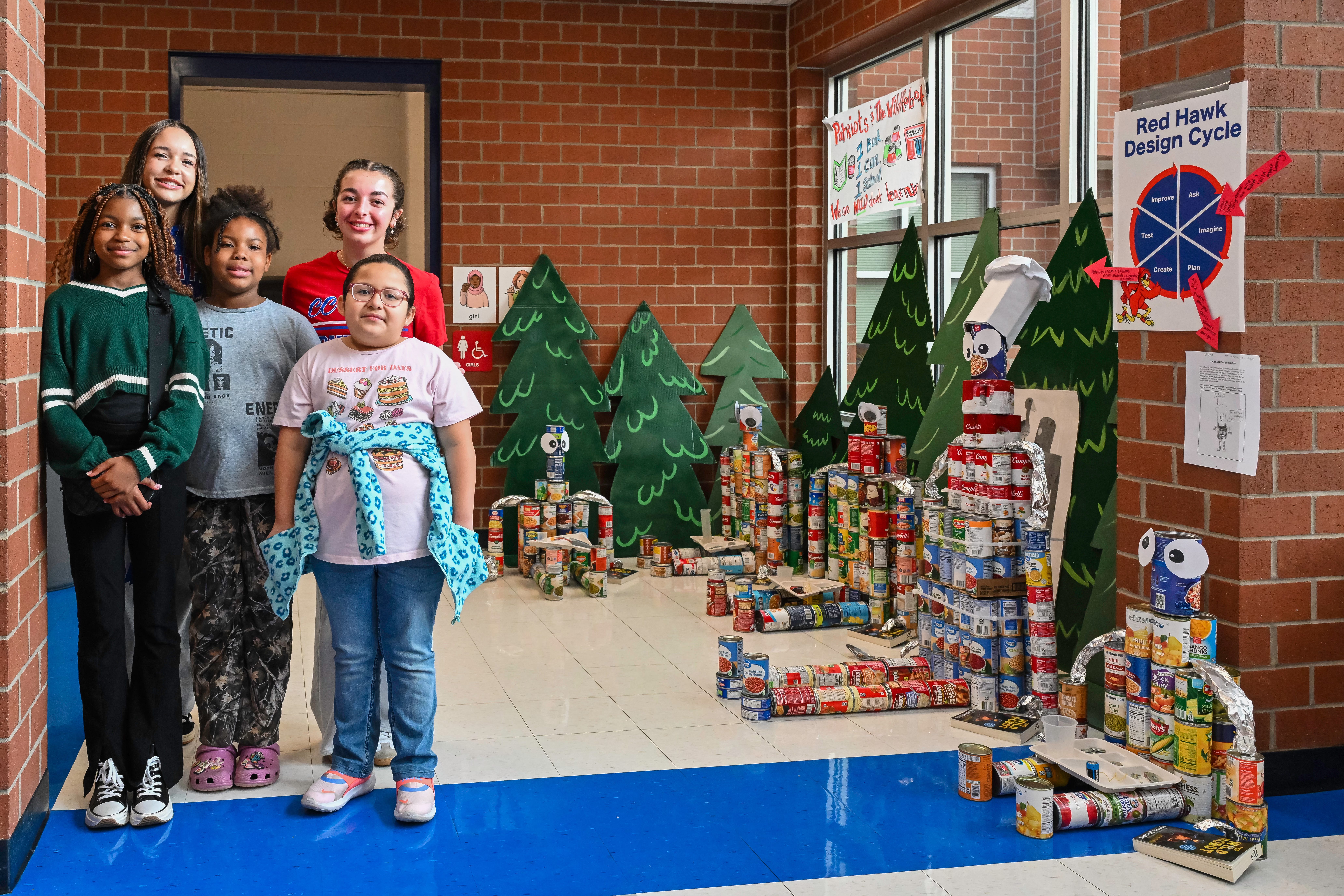
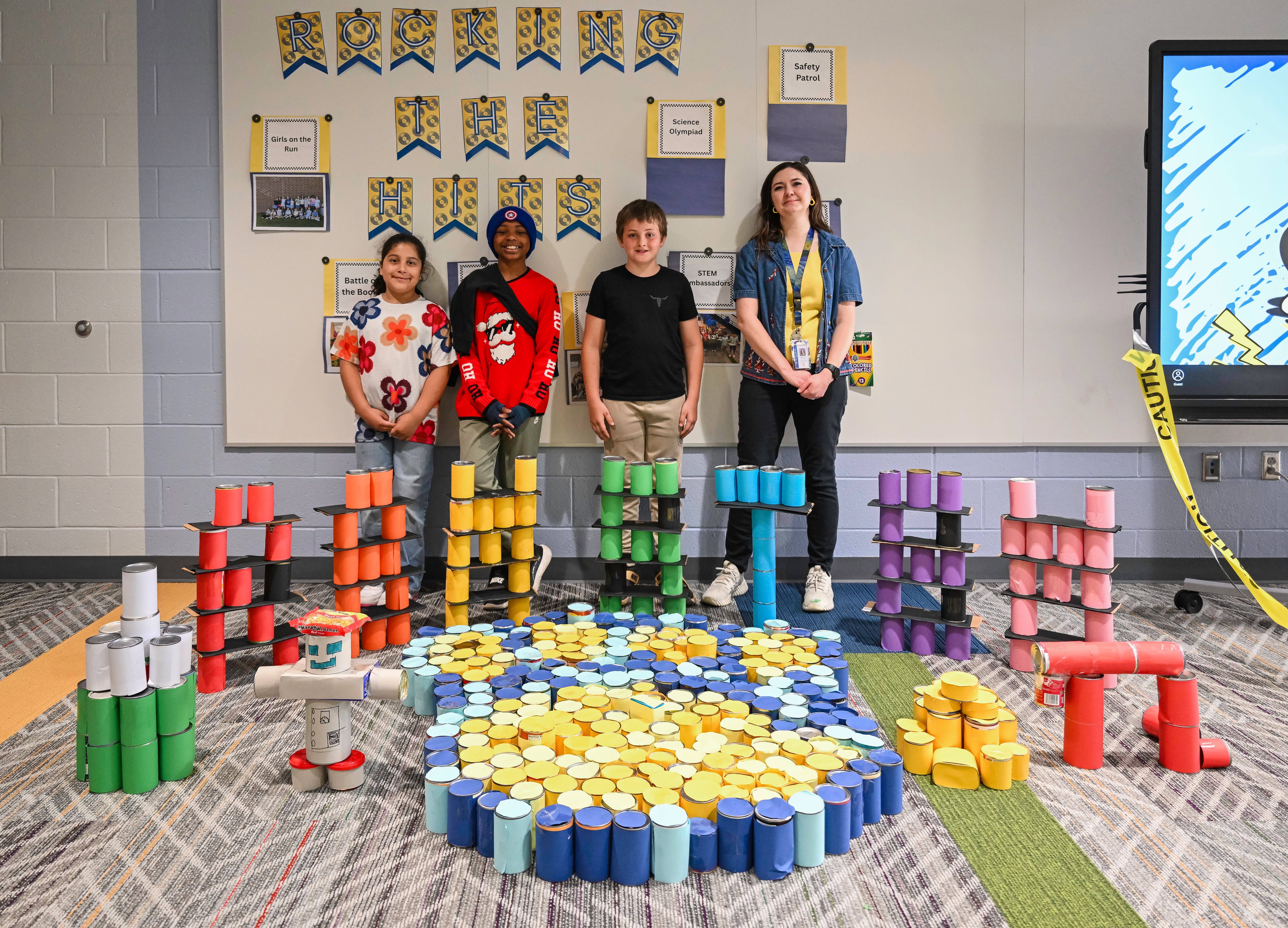
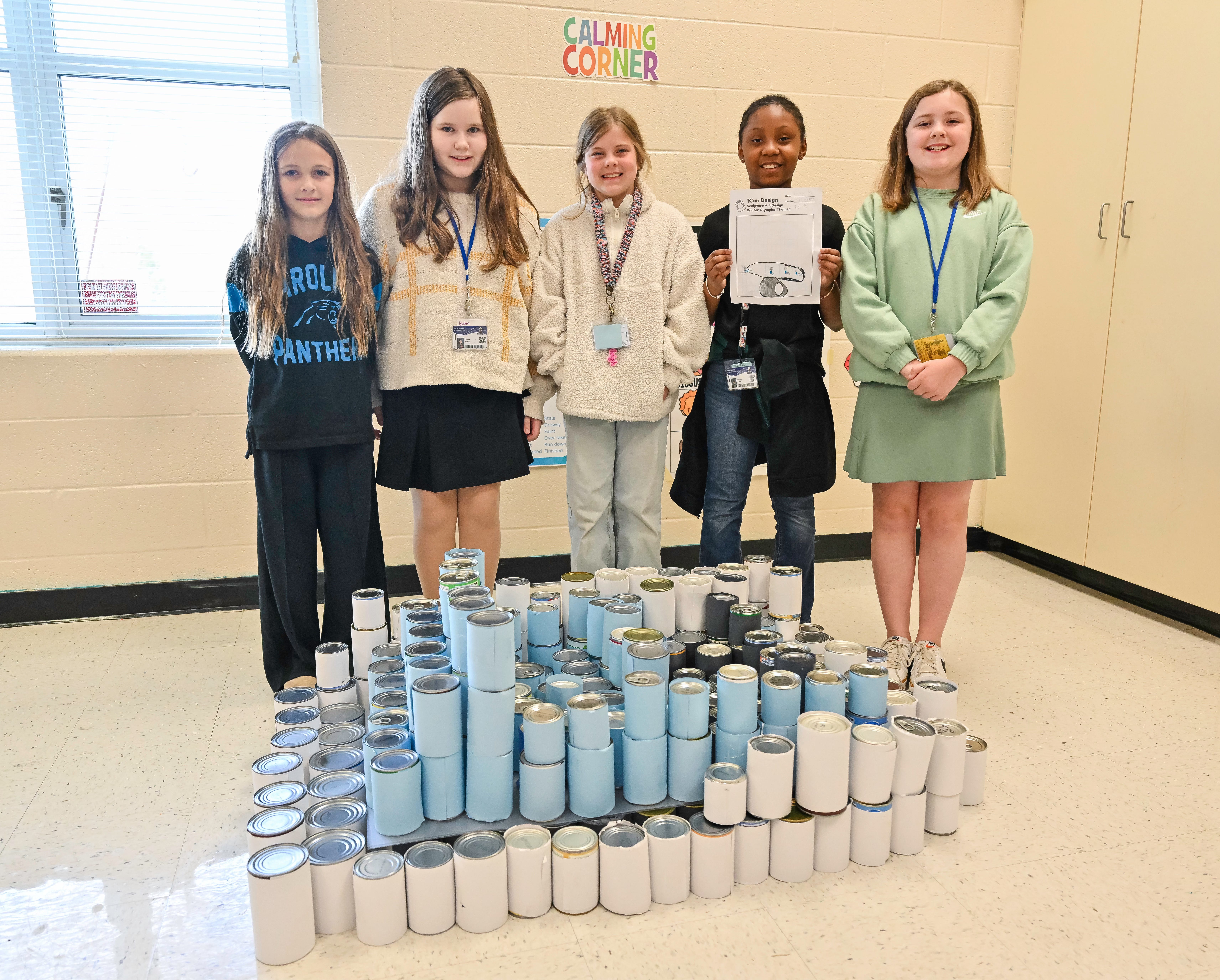
“I think one of the biggest pieces of the partnership between 1Can and CCS STEM is that our design cycle starts with empathy,” said Jennifer Caligan, Cabarrus County Schools’ District STEM coordinator and Central Cabarrus STEM coach. “What better way to help our community than those in need?”
Though rooted in STEM, the challenge often leaned into STEAM — science, technology, engineering, arts and mathematics — as students combined technical thinking with artistic vision, Caligan said.
Many younger students gravitated toward the artistic side of the challenge, while older students emphasized engineering and design, Caligan said.
The initiative is expected to become an annual event, she added.
The Cabarrus Compass visited three schools Tuesday morning as about a dozen community judges evaluated the finished projects — each one reflecting a different approach to both design and teamwork.
At Central Cabarrus, a group of students in a 3D Modeling and Animation class quickly learned that engineering often requires adaptation.
Their original plan — a Viking longboat — proved too ambitious when the design didn’t come together. Instead, they pivoted, creating “Victor the Viking,” a seated figure constructed from roughly 150 to 200 cans.
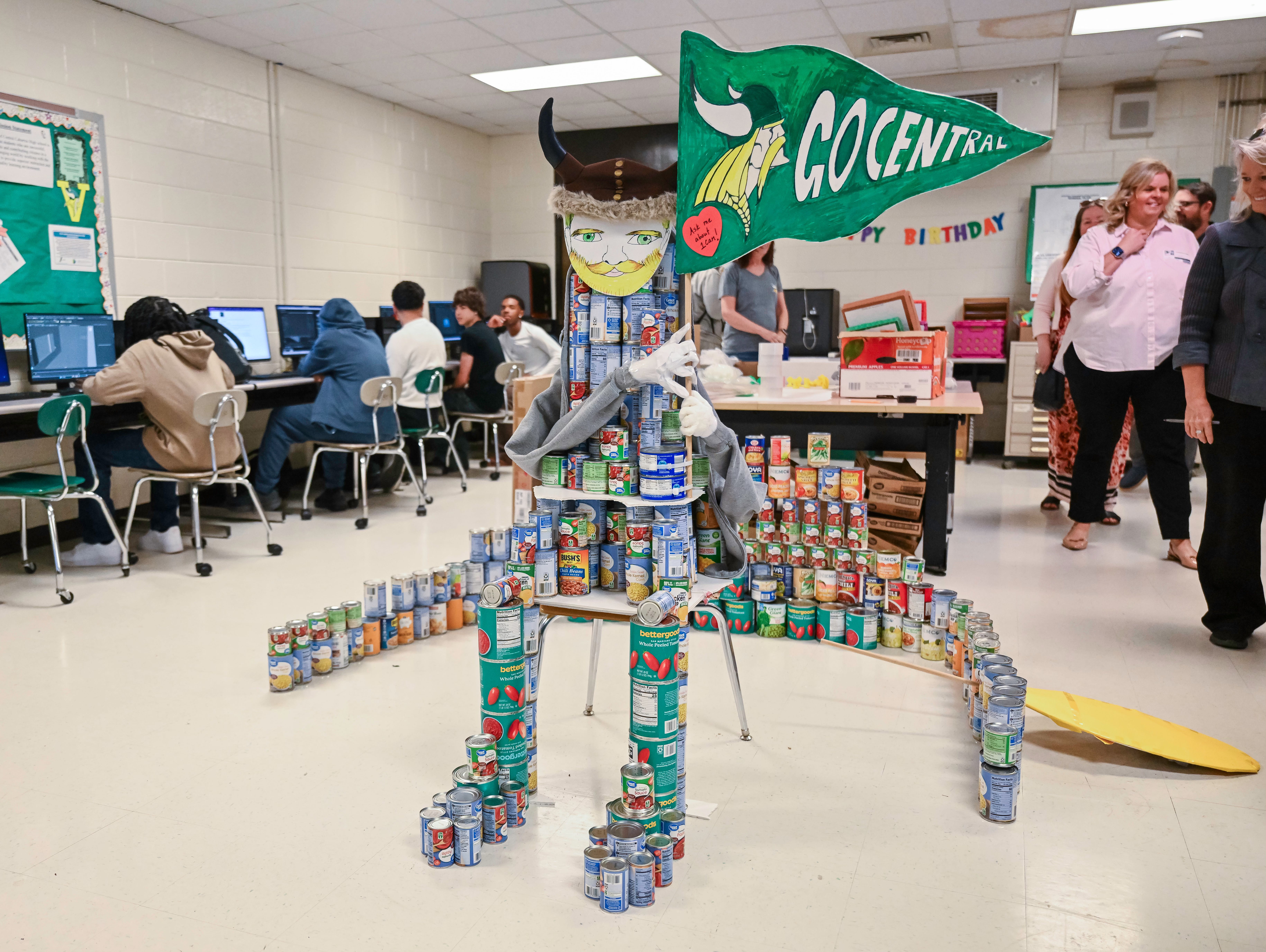
Senior Camden Cobb said his favorite part was bouncing ideas off teammates and working through the challenge of pivoting from the boat concept to the Viking. The biggest obstacle, he said, was shaping the cans into a human form.
Junior Hadassah Edward said the process began with visualization, including sketching out the original longboat design before realizing it wouldn’t work — a key lesson in iteration.
The small team, just four students, spent several weeks bringing the project to life.
“Even though there were only a few of us, we were still able to collaborate and worked really smoothly together,” junior Leeleean Dawkins said.
“I loved this so much,” Dawkins added. “That’s probably my favorite part about STEM — it’s building stuff.”
At J.N. Fries Middle School, the project took on a cinematic twist.
Roughly 45 students, led by art and theater teacher Amber Hyatt-Lisk, created a large-scale version of WALL-E, the beloved robot from the 2008 Disney/Pixar film. The structure, made from 192 cans, was inspired by eighth grader Pax Melton.
“It just kind of came to me naturally,” Melton said. “The first thing I thought of was a Disney robot.”

For students like eighth grader Katelyn Bechtol, the build reinforced the importance of teamwork.
“It definitely took a lot of collaboration,” she said. “We had to work together and listen to each other’s ideas.”
Hyatt-Lisk said the project underscored how art is inseparable from design.
“You have to have artists in everything that is done and built and designed,” she said. “Sometimes the artists get overlooked by the engineers and architects — but you can’t spell architect without art.”
At Coltrane-Webb Elementary, younger students embraced both creativity and scale.
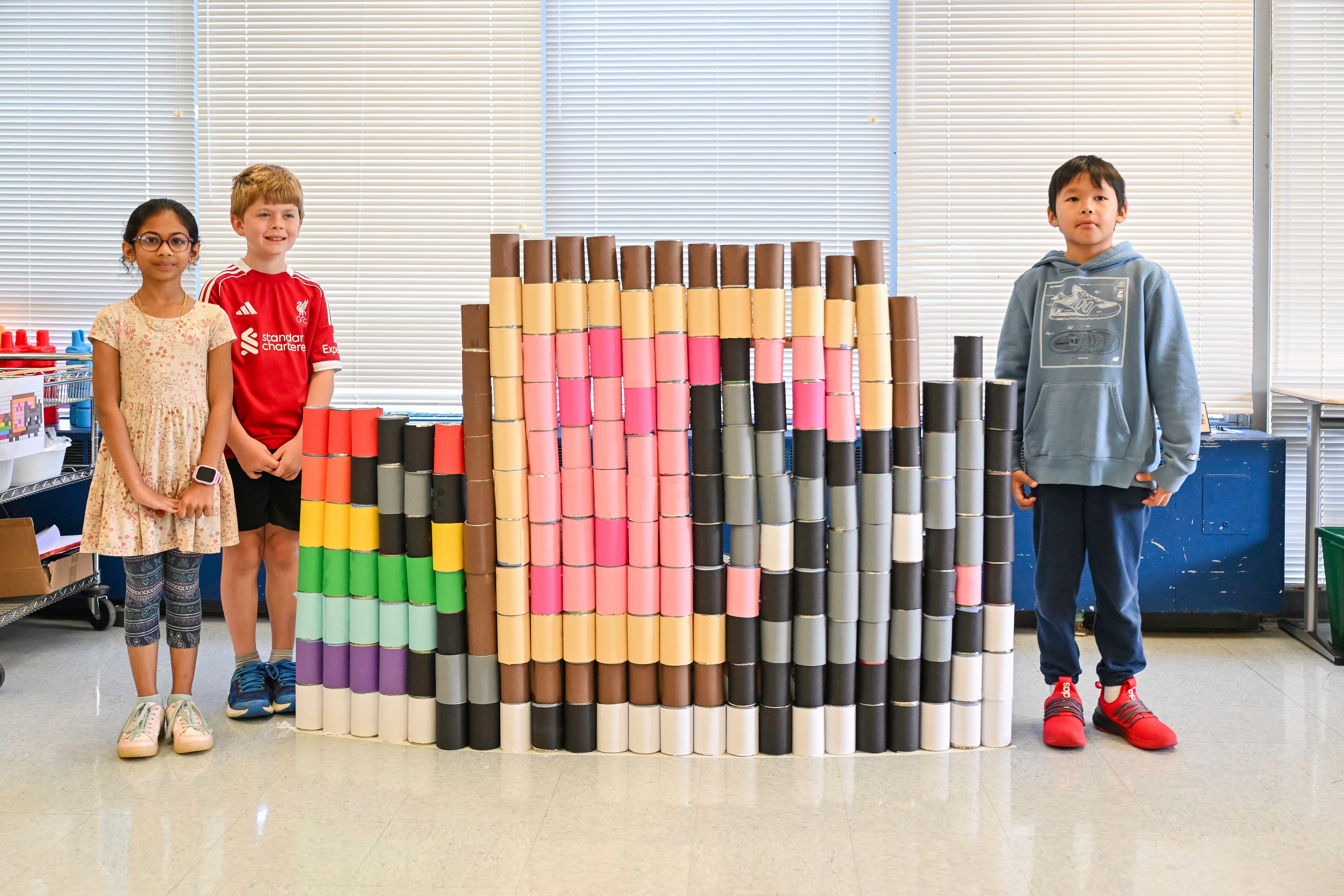
Using roughly 430 cans, third graders constructed a colorful version of Nyan Cat — a colorful, pixelated cat with a Pop-Tart body inspired by a viral YouTube video that is now an Internet meme.
Up close, the structure appears abstract. But from a distance, the image sharpens — a lesson in perspective that students quickly recognized.
“Usually a pixel becomes clearer if you see it far away,” said Tanushree Srinivasan.
The project helped teach Max Donner “to have better teamwork.”
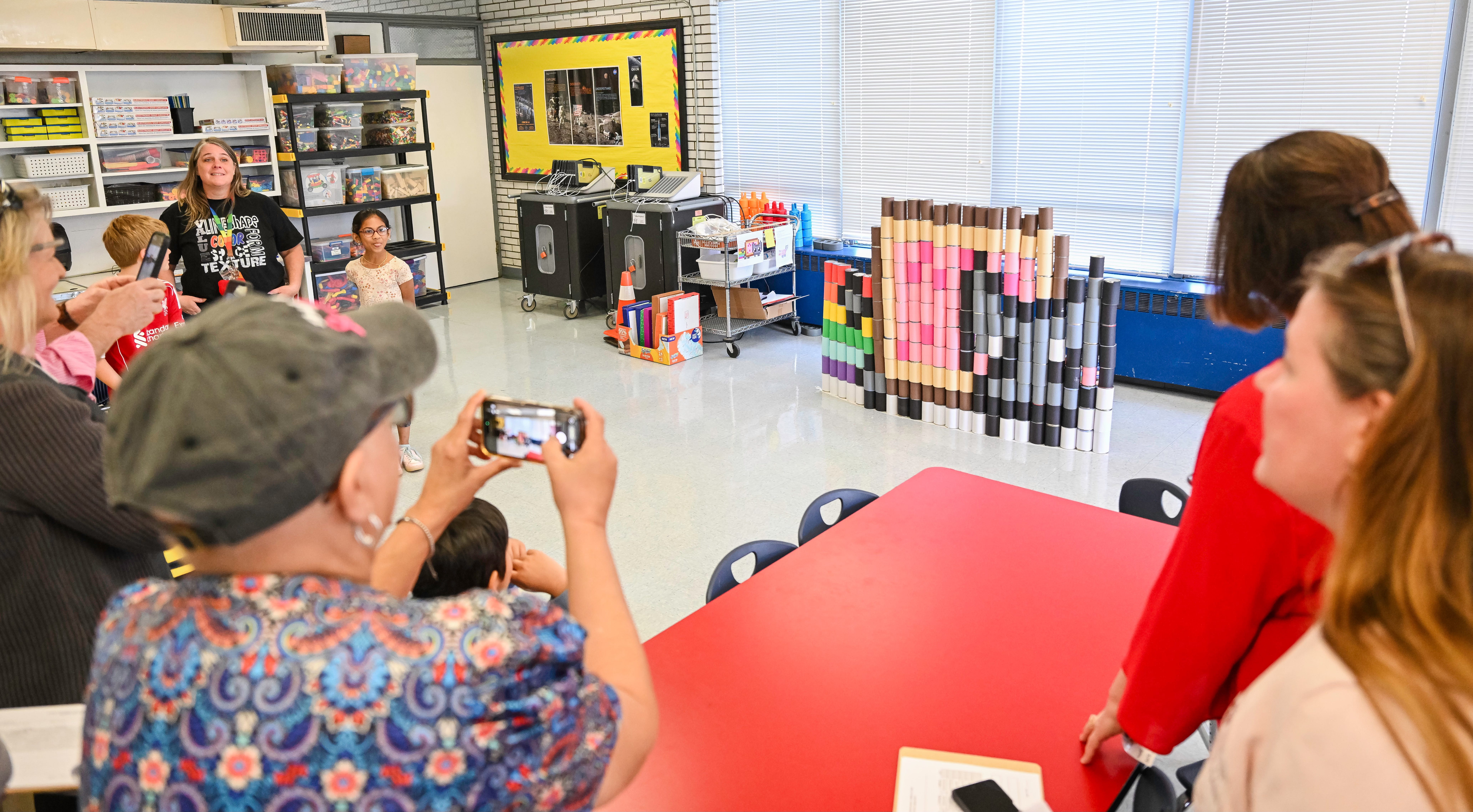
Art teacher Heather Geiser said the project pushed her students beyond their initial doubts.
“I’m so proud of my third graders because they really rose to the challenge,” she said. “They didn’t think they could do it at the beginning. It was a little rough at first, but then they all came together and worked really hard as a team.”
In the end, Northwest Cabarrus took top honors at the high school level, while Coltrane-Webb earned the top spot among elementary and middle schools.