


Communities across Cabarrus County are calling on residents to conserve water as extreme drought conditions continue to impact the region and strain local water supplies.
The City of Kannapolis and the Town of Harrisburg both issued voluntary conservation requests Monday, citing significantly below-average rainfall and declining water levels in key sources. The City of Concord last week called on residents and businesses to voluntarily reduce water usage.
Officials across the county say the area is now classified under “extreme drought” (D3) conditions, following recent guidance from the North Carolina Drought Management Advisory Council. A key regional water source, Lake Fisher, is currently about 11 inches below full capacity, raising concerns about long-term supply.
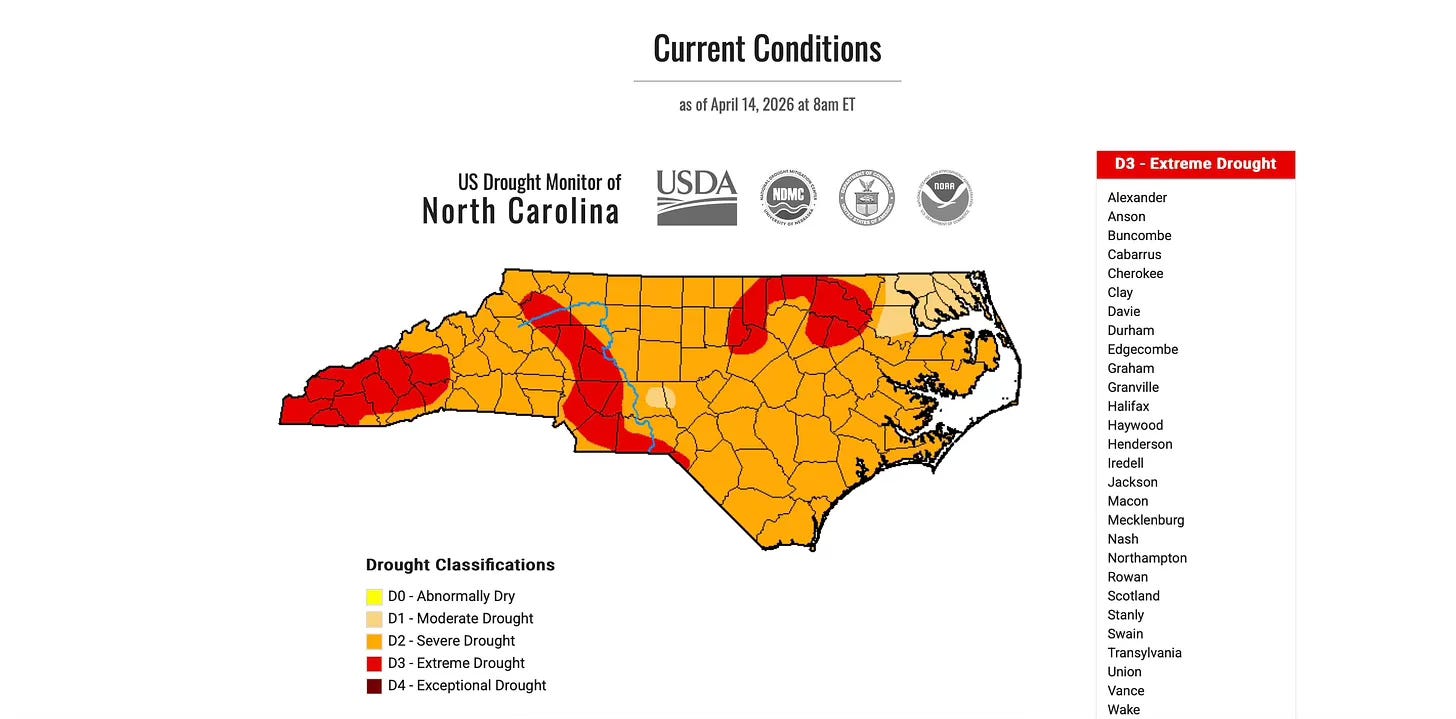
Kannapolis officials reported that rainfall in 2025 was 7.6 inches below normal, with an additional 4-inch deficit so far in 2026. As a result, the city has implemented Stage 1 Voluntary Water Restrictions, asking residents to reduce water use by 3–5 percent until conditions improve.
“We are hopeful that we will have rainfall and the drought will lessen, but at this time we need to conserve water,” said Alex Anderson, Kannapolis Water Resources Director. “Our winter and spring months have been very dry and typical spring rain showers have not occurred.”
Meanwhile, in Harrisburg, officials say the drought is affecting water availability across the broader region.
“Our area is experiencing extreme drought conditions,” said Jonathan Young, Harrisburg Public Works Director, emphasizing that conservation is a shared responsibility among residents and neighboring communities.
Harrisburg receives its water through a regional system operated by Concord in coordination with the Water and Sewer Authority of Cabarrus County (WSACC), highlighting the interconnected nature of the region’s water supply.
Conservation Measures Encouraged
Both municipalities are urging residents to adopt similar water-saving practices, including:
Limiting outdoor watering to early morning or evening hours
Running dishwashers and washing machines only with full loads
Fixing leaks in toilets and faucets promptly
Taking shorter showers instead of baths
Avoiding unnecessary water use while brushing teeth or washing dishes
Using commercial car washes that recycle water
Kannapolis is also encouraging residents to defer planting new landscaping and limit irrigation to designated days, while Harrisburg recommends adjusting irrigation systems for efficiency.
Regional Impact and Next Steps
The drought extends beyond local jurisdictions, with North Carolina currently under a statewide burn ban issued by the N.C. Forest Service, prohibiting most outdoor burning.
Officials warn that if dry conditions persist, mandatory water restrictions could follow.
Residents are encouraged to monitor drought conditions through the North Carolina Drought Management Advisory Council and continue conservation efforts until significant rainfall replenishes water supplies.