

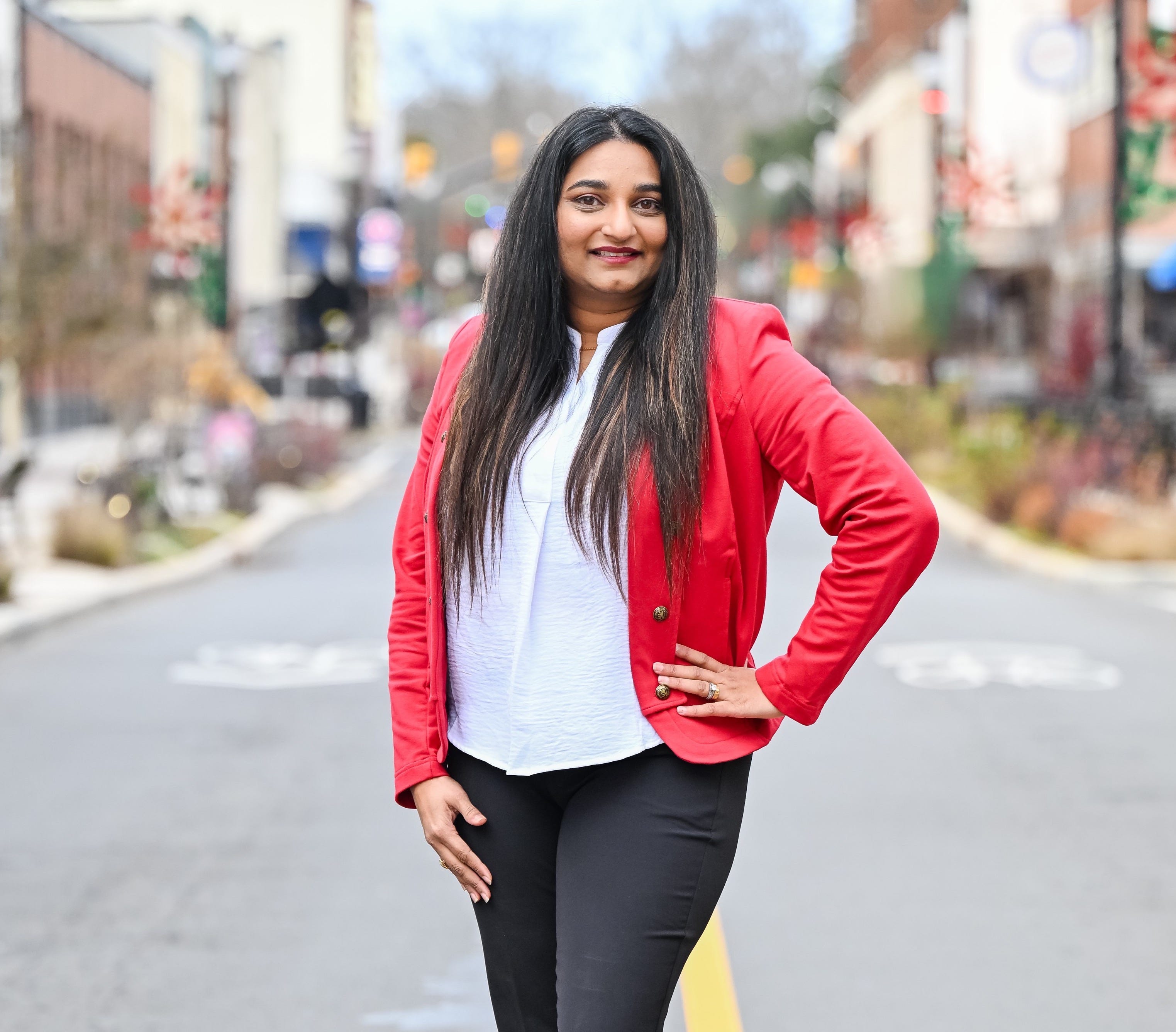
Krushani Patel is one of eight Republicans running in the primary for three seats on the Cabarrus County Board of Commissioners. Here are her answers to questions from The Cabarrus Compass.
1. Please tell us about your background and your connection to Cabarrus County. How long have you lived in the county, and what ties do you have to the community?
Cabarrus County has been my home for the past eight years. My family and I chose to build our lives here because of the county’s strong sense of community, opportunity, and affordability. During that time, I have owned and operated small businesses, worked closely with local families, and become actively involved in community organizations.
My ties to Cabarrus County are rooted in both personal and professional experiences, as a homeowner, business owner, and community advocate. This county is where we’ve invested our future, and I am deeply committed to ensuring it remains a place where families and businesses can thrive.
2. What motivated you to become involved in public service and to run for the Cabarrus County Board of Commissioners at this time?
I decided to run for county commissioner because I see a growing gap between county decisions and the everyday realities residents and small businesses face. Rising taxes, increasing debt, rapid growth, and regulatory challenges are affecting affordability and quality of life.
I believe this is a critical moment for Cabarrus County to bring fresh perspective, fiscal discipline, and forward-thinking leadership to the table. Public service, to me, is about listening, problem-solving, and making decisions that protect both current residents and future generations.
3. What qualifications, skills, or experiences do you believe best prepare you to serve as a county commissioner?
My background as a small business owner has given me firsthand experience managing budgets, navigating regulations, and making tough financial decisions. I understand what it takes to balance growth with sustainability.
I also have experience working collaboratively with community partners and serving in leadership roles focused on early childhood and family support. These experiences have strengthened my ability to analyze complex issues, prioritize needs, and advocate for practical, results-driven solutions.
4. What role do you believe county government should play — and should not play — in economic development, land use, and public-private partnerships?
County government should act as a facilitator, not an obstacle. Its role is to create clear, predictable policies; invest in essential infrastructure; and foster partnerships that support responsible growth.
The county should not micromanage businesses or overregulate in ways that discourage investment. Public-private partnerships, when done transparently and responsibly, can help expand services and opportunities without unnecessarily increasing the tax burden on residents.
5. In your view, what are the most significant issues currently impacting Cabarrus County residents, and why?
Affordability, rapid growth, and fiscal sustainability are among the most pressing issues. Property taxes, housing costs, and the rising cost of county services are straining families and small businesses.
At the same time, growth is placing increased demand on schools, public safety, infrastructure, and social services. Addressing these challenges requires careful planning, long-term financial discipline, and a commitment to smart growth.
6. According to the U.S. Census, Cabarrus County’s population has grown from approximately 178,000 in 2010 to about 250,000 today. How would you approach managing continued growth while preserving quality of life for residents?
Managing growth starts with planning ahead, not reacting at the last minute. I support smart, data-driven growth strategies that align development with infrastructure capacity, school planning, and public safety needs.
Growth should be phased, fiscally responsible, and balanced between residential and commercial development so existing residents are not overburdened. Preserving quality of life means ensuring growth enhances communities rather than overwhelming them.
7. What do you see as the county’s most urgent infrastructure or capital needs over the next several years, and how should these needs be addressed?
Key priorities include school facilities, public safety infrastructure, transportation, and utilities. These needs should be addressed through a transparent, multi-year capital planning process that evaluates timing, cost controls, and financing options. Strategic sequencing and early land planning can help avoid delays and cost overruns while minimizing the impact on taxpayers.
8. If elected, which area or function of county government would you prioritize for increased attention, and what specifically would you hope to improve?
I would prioritize fiscal oversight and early, preventative investments — particularly in areas like public safety, youth prevention, and workforce support. Improving coordination between departments, nonprofits, and community partners can help deliver better outcomes while reducing duplication and long-term costs.
9. What is one decision or action taken by the current Board of Commissioners that you believe was handled well, and one area where the board should improve?
The current board has made important investments to accommodate growth, particularly in public facilities. However, I believe there is room for improvement in long-term planning and transparency, especially in budget development and debt management. Earlier planning and clearer public communication would strengthen trust and fiscal stability.
10. Do you support maintaining current tax rates, lowering them, or making changes to the county’s tax structure? Please explain your position.
I support maintaining affordability by limiting tax increases and exploring opportunities to reduce the burden on residents whenever possible. This includes controlling spending growth, seeking grants and partnerships, and ensuring that commercial development contributes fairly to the tax base. Any changes to the tax structure should be carefully evaluated and openly discussed with the public.
11. County budgeting involves difficult trade-offs, and projections show a roughly $13.7 million deficit in FY 2027. If elected, how would you approach setting spending priorities, evaluating potential reductions or revenue options, and closing the projected deficit while maintaining essential county services?
Addressing the projected deficit requires early action, not last-minute decisions. I would support a budgeting process that requires departments to submit requests earlier, emphasizes performance and outcomes, and identifies efficiencies or duplication.
The focus should be on protecting core services while tightening spending, prioritizing needs, and responsibly evaluating all options before considering additional tax burdens.
12. If elected, what would be your top priorities during your first year in office, and how would they align with your approach to budgeting and financial management?
My first-year priorities would include improving budget transparency, strengthening long-term capital planning, and fostering collaboration across departments and community partners. These efforts align with a disciplined, forward-looking approach to financial management that emphasizes accountability, sustainability, and protecting taxpayers while meeting the county’s growing needs.