

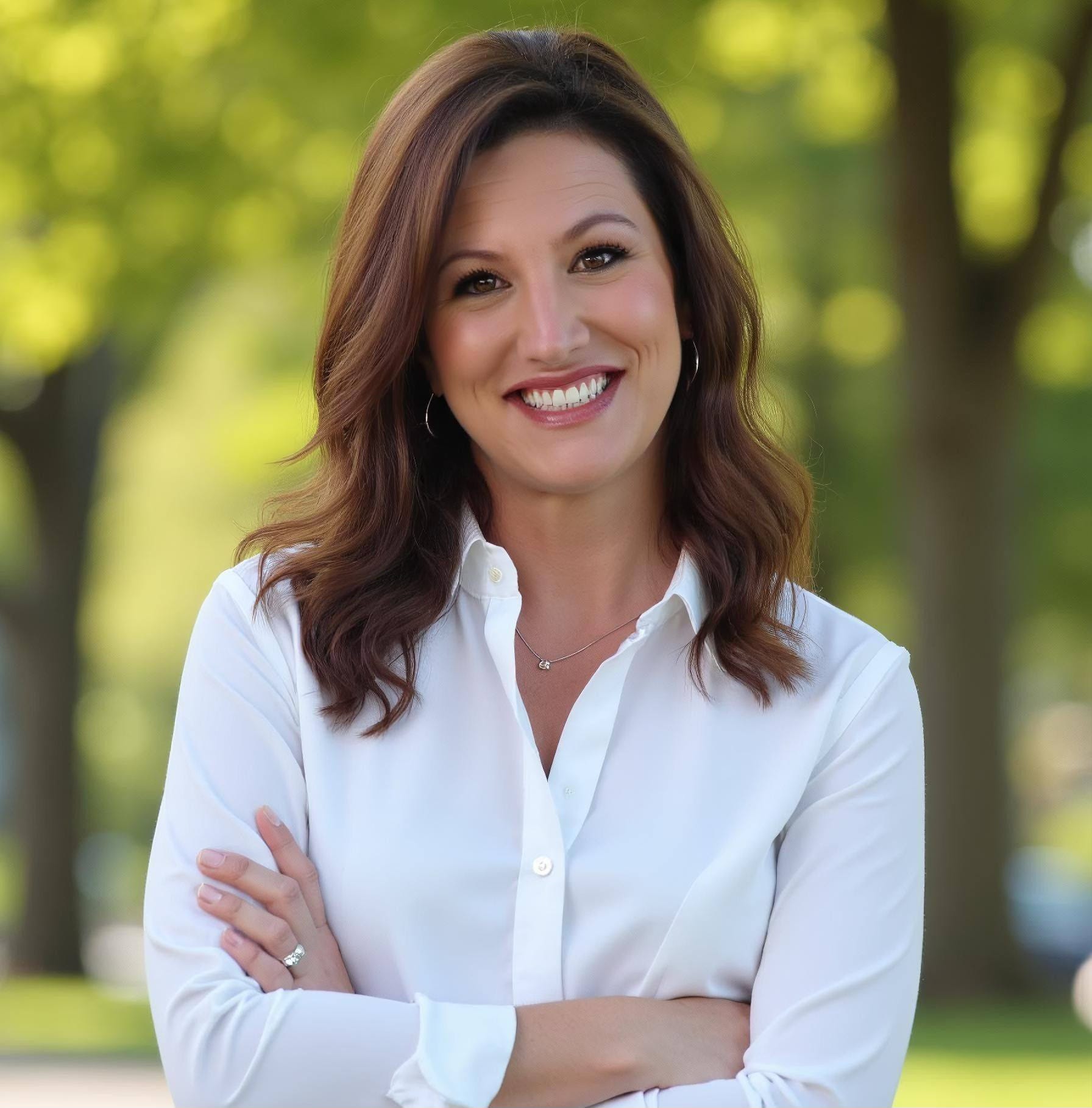
Alexis Hughes is one of eight Republicans running in the primary for three seats on the Cabarrus County Board of Commissioners. Here are her answers to questions from The Cabarrus Compass.
1. Please tell us about your background and your connection to Cabarrus County. How long have you lived in the county, and what ties do you have to the community?
I am a longtime North Carolina resident, a small business owner, a wife, a mother of 3, and a deeply invested member of the Cabarrus County community. My family lives here, my children have attended school here, and my professional and civic life are rooted here.
I am not a transient political figure or a career politician. I am raising my family in this county and plan to stay here, which means the decisions made today directly affect my children’s future and my neighbors’ quality of life.
My ties to Cabarrus County are not theoretical. They are personal. I work daily with families trying to afford housing, seniors on fixed incomes, and small business owners struggling under rising costs. Cabarrus County is not just where I live; it is the community I am committed to protecting and strengthening.
2. What motivated you to become involved in public service and to run for the Cabarrus County Board of Commissioners at this time?
I decided to run because too many decisions are being made without sufficient regard for long term consequences, fiscal discipline, or accountability to taxpayers. County government has a duty to focus on core responsibilities, yet we increasingly see blurred lines between what is necessary and what is ideological, aspirational, or politically convenient.
I am running because the pace of growth, rising costs, and looming budget pressures make this a pivotal moment. If we do not course correct, families will be priced out, infrastructure will lag behind development, and taxpayers will shoulder the burden of past mismanagement. I believe this county needs leaders who are willing to ask hard questions, say no when necessary, and put facts over feelings.
I am running as a constitutional conservative who believes government exists to serve, not to experiment; to protect, not to overreach; and to steward, not to spend recklessly. Cabarrus County deserves leadership that is grounded, principled, and accountable. That is the leadership I intend to provide.
3. What qualifications, skills, or experiences do you believe best prepare you to serve as a county commissioner?
I bring real world experience, not just policy theory. I have built and managed businesses, navigated budgets, analyzed contracts, and worked through complex regulatory environments. I understand how decisions made at the county level ripple outward into housing costs, taxes, and economic opportunity.
I am data-driven, detail oriented, and unafraid to challenge assumptions. I also have experience serving on local boards and commissions, which has given me firsthand exposure to land use decisions, zoning, and the practical realities of growth management. Most importantly, I bring a citizen’s mindset: every dollar spent is someone else’s hard earned money.
4. What role do you believe county government should play — and should not play — in economic development, land use, and public-private partnerships?
County government should act as a facilitator, not a market manipulator. Its role is to ensure infrastructure readiness, enforce fair and predictable rules, and protect property rights. It should not be picking winners and losers, offering excessive incentives, or entering into public private partnerships that socialize risk and privatize reward.
Economic development must be rooted in transparency, return on investment, and alignment with community capacity. Land use decisions should respect existing residents, infrastructure limits, and long term sustainability. Growth is not inherently bad, but unmanaged growth is costly, destabilizing, and unfair to taxpayers.
5. In your view, what are the most significant issues currently impacting Cabarrus County residents, and why?
The biggest issues facing Cabarrus County residents are affordability, infrastructure strain, and trust in government.
Families are struggling with rising property taxes, housing costs, insurance, and basic necessities. Rapid growth has outpaced roads, schools, and emergency services. At the same time, many residents feel decisions are being made without clear communication, measurable outcomes, or accountability.
These issues are interconnected. Poor planning leads to higher taxes. Lack of discipline leads to deficits. And when government loses focus on its core mission, residents lose confidence.
6. According to the U.S. Census, Cabarrus County’s population has grown from approximately 178,000 in 2010 to about 250,000 today. How would you approach managing continued growth while preserving quality of life for residents?
Growth must be paced, planned, and paid for responsibly. That means aligning development approvals with capacity, enforcing concurrency, and ensuring that growth pays for growth.
Preserving quality of life requires protecting neighborhoods, maintaining rural character where appropriate, and resisting the temptation to approve density without a plan. It also requires listening to residents who already live here, not just developers with proposals.
7. What do you see as the county’s most urgent infrastructure or capital needs over the next several years, and how should these needs be addressed?
The most urgent needs are schools, emergency services, and utilities. These are not optional; they are foundational.
Addressing them requires prioritization, not expansion of wish lists. Capital planning should be realistic, phased, and tied to actual population and service demands. Debt should be used sparingly and strategically, not as a default solution to avoid hard budget decisions.
8. If elected, which area or function of county government would you prioritize for increased attention, and what specifically would you hope to improve?
If elected, I would prioritize budget oversight and operational accountability. Before expanding programs or funding new initiatives, we must ensure existing ones are effective, necessary, and properly managed.
I would push for clearer performance metrics, regular audits, and more transparent reporting so taxpayers can see where their money is going and what they are getting in return.
9. What is one decision or action taken by the current Board of Commissioners that you believe was handled well, and one area where the board should improve?
The current Board has made some responsible investments in core infrastructure, which is necessary given growth pressures.
However, where improvement is needed is in long term fiscal planning and communication. Too often, decisions are made incrementally without fully addressing cumulative impact. Residents deserve clearer explanations, better forecasting, and a stronger commitment to restraint.
10. Do you support maintaining current tax rates, lowering them, or making changes to the county’s tax structure? Please explain your position.
I support maintaining or lowering tax rates, not increasing them. Taxpayers are already stretched thin, and government must learn to live within its means just like families do.
Before any discussion of new revenue, the county must demonstrate that it has exhausted efficiencies, eliminated waste, and prioritized essential services over discretionary spending.
11. County budgeting involves difficult trade-offs, and projections show a roughly $13.7 million deficit in FY 2027. If elected, how would you approach setting spending priorities, evaluating potential reductions or revenue options, and closing the projected deficit while maintaining essential county services?
A projected $13.7 million deficit is not a surprise; it is the result of structural decisions made over time. Addressing it requires a disciplined, methodical approach.
First, distinguish between mandatory and discretionary spending. Second, evaluate programs for effectiveness and necessity. Third, pause expansion until finances stabilize. Revenue options should be a last resort, not a starting point.
The goal is not austerity for its own sake, but sustainability. Essential services must be protected, but they must also be delivered efficiently.
12. If elected, what would be your top priorities during your first year in office, and how would they align with your approach to budgeting and financial management?
In my first year, my priorities would be:
A deep review of the county budget and long-term financial outlook
Stronger growth management policies tied to infrastructure capacity
Increased transparency and public engagement
Reinforcing the county’s focus on core services
These priorities align with my belief that good governance starts with discipline, clarity, and respect for taxpayers. If we get the fundamentals right, everything else becomes more manageable.