

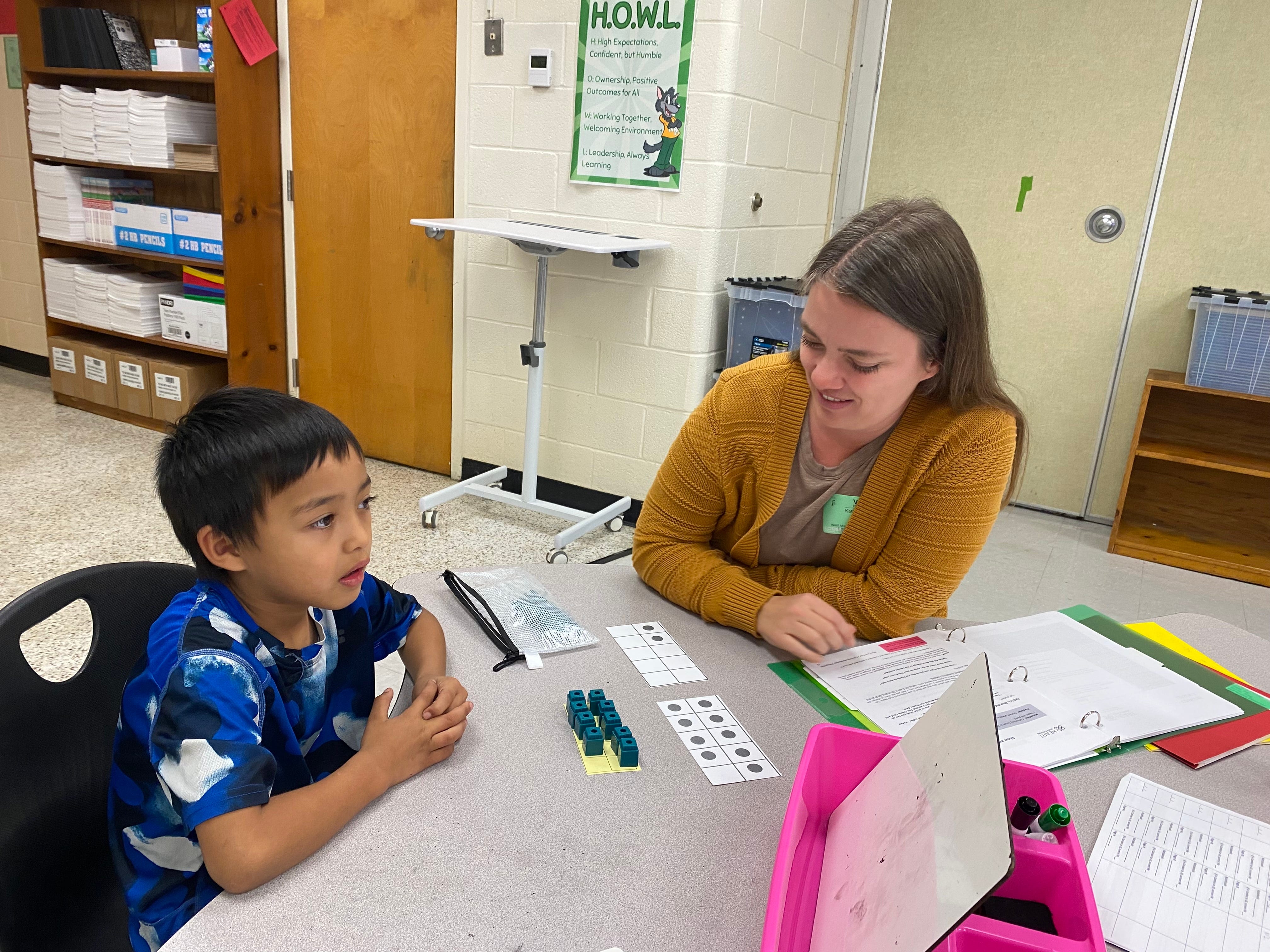
For many students at Wolf Meadow Elementary School, seeing Sydney Bray arrive at their classroom has become one of the highlights of their week.
That’s because Bray isn’t coming to give them another assignment or test. Instead, she’s there to take them to something they eagerly anticipate: a one-on-one tutoring session filled with games, encouragement and opportunities to strengthen their math skills.
“Kids are over the moon about math tutoring,” Bray told The Cabarrus Compass during a recent visit to the school.
But while the enthusiasm has been unmistakable, not every student who could benefit from the program has been able to participate.
Since launching at Wolf Meadow in early October, Heart Math Tutoring, a Charlotte-based nonprofit, has enrolled 30 first- and second-graders in its individualized tutoring program. The goal is to serve 50 students, but a shortage of volunteers has left 20 additional children waiting for the opportunity.
“We do have a waitlist of students,” said Bray, Heart Math’s Cabarrus County outreach and program coordinator. “So as soon as we have the tutor, we have the student ready to go.”
Now, organizers are appealing to the Cabarrus County community for 20 more volunteer tutors to help close that gap.
The commitment is relatively small — approximately 30 minutes to one hour a week — and no previous tutoring or mathematics experience is required.
For the students, however, that hour of individualized attention can make a lasting difference.
Building confidence, one student at a time
Founded in 2013, Heart Math Tutoring partners with elementary schools to strengthen students’ foundational math skills through individualized instruction provided by trained community volunteers.
The nonprofit currently serves approximately 1,400 students across 34 schools in Charlotte, Winston-Salem and Charleston, South Carolina.
Its arrival at Wolf Meadow this fall marks the organization’s first partnership with Cabarrus County Schools, an initiative championed by Chief Academic Officer Sarah Reeves.
A former elementary school principal in Charlotte, Reeves had witnessed the program’s impact firsthand and helped bring it to Cabarrus County.
At Wolf Meadow, participating students receive two 30-minute tutoring sessions each week during the school day, working with volunteers who provide consistent encouragement and individualized support.
The program emphasizes developing “number sense” — helping students understand how numbers work and relate to one another rather than simply memorizing mathematical procedures.
Those foundational skills are particularly important in the early elementary grades, when students are developing the mathematical understanding they will need for more advanced coursework.
The need for early intervention is especially evident in Cabarrus County, where significant math achievement gaps persist.
On 2025 state exams, just 51% of economically disadvantaged fourth-graders in the district demonstrated math proficiency, compared with 81% of their more affluent peers, according to data presented by Heart Math Tutoring.
Wolf Meadow Principal Brian Dulin said the additional assistance has been valuable for students who need extra support.
“It’s definitely helping us,” Dulin said. “So this is helping us to get some support for K-2 students to have those foundational skills.”
Students were selected for the program based on a combination of end-of-year academic data from the previous school year and beginning-of-year assessments this fall, Dulin added.
The tutoring primarily targets students who are performing at or slightly below grade-level proficiency and could benefit from additional individualized instruction.
For some, the experience is also changing how they feel about math.
Bray said students have quickly become accustomed to their tutoring schedules and eagerly await her arrival.
“It’s been absolutely fantastic,” she said of the program’s first month.
The enthusiasm reflects one of Heart Math’s central goals: helping children not only improve their mathematical abilities but also develop greater confidence in themselves as learners.
A rewarding experience for volunteers
That enthusiasm extends to the volunteers, many of whom say the experience has been just as meaningful for them as it has been for the students.
Kathleen Epperson, a former fourth-grade teacher at Wolf Meadow, has returned to the school as a Heart Math tutor, working with a first-grader named Ethan.
During a recent tutoring session, Epperson helped Ethan practice addition using blocks as part of an interactive math game.
For Epperson, the experience has rekindled the aspects of teaching she enjoyed most.
“Heart Math is basically everything I loved about teaching,” she said. “We get to just hang out, build the relationship and play fun math games. He’s super engaged and it’s just easy.”
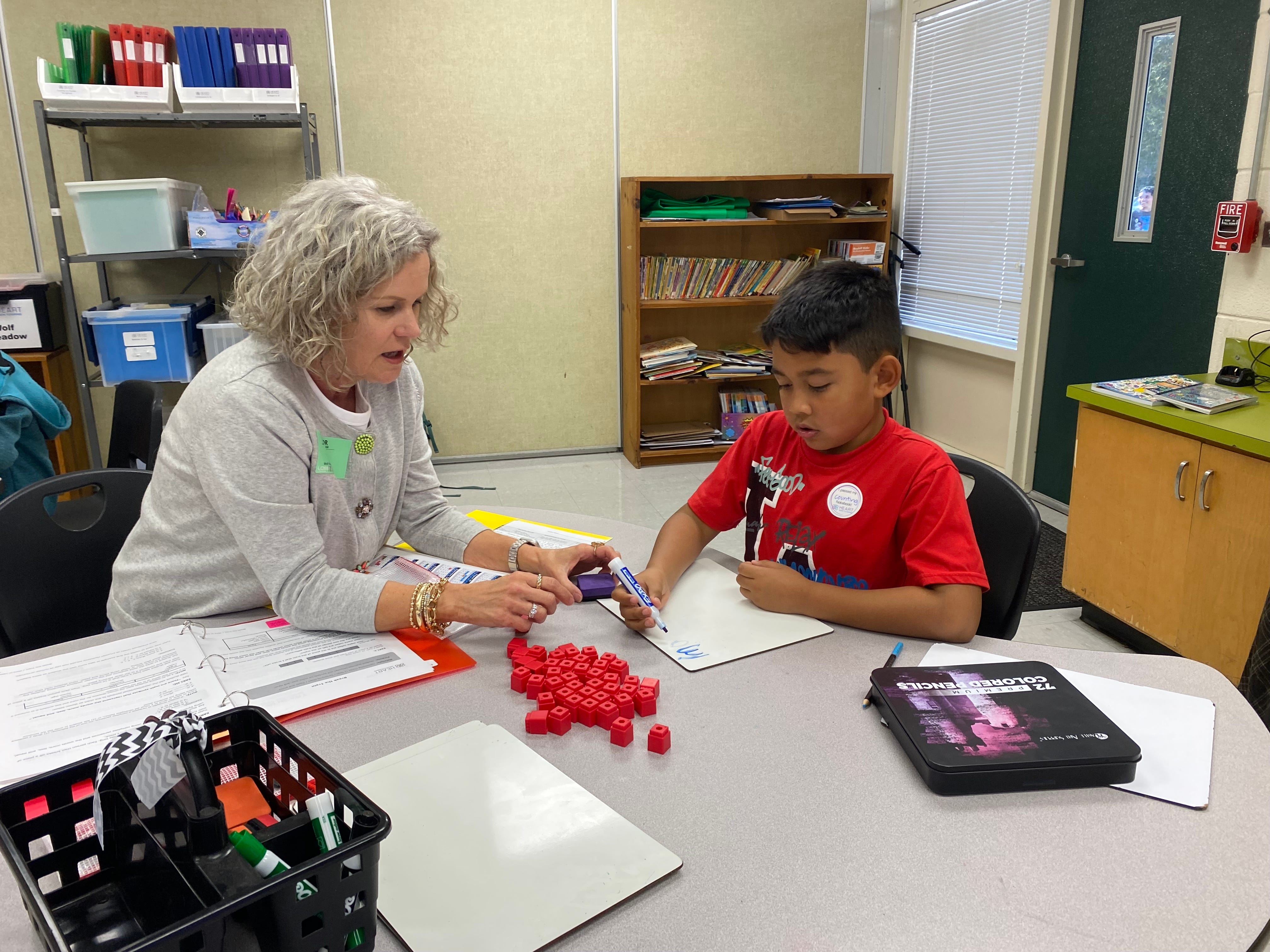
Another volunteer, Barbi Jones, the former president and CEO of the Cabarrus Chamber of Commerce, works with two students and said watching their progress has been especially gratifying.
“It’s just so rewarding to see these kids excel,” Jones said. “The future is going to be based on what they learn today, and so to see them progress so quickly is just the best. It’s something I look forward to every week.”
Her enthusiasm for the program is difficult to overstate.
“It’s the best volunteer experience I’ve ever had,” Jones added.
Padgett Vaughn, Heart Math’s vice president of volunteer operations and a former elementary school teacher, said that enthusiasm has helped attract additional volunteers through personal recommendations.
“It does seem like the volunteers have had a very positive experience thus far,” Vaughn said, noting that several have encouraged friends and acquaintances to participate. “It’s because they’re having such a positive experience.”
Twenty more volunteers needed
Despite the program’s promising start, Heart Math faces a significant challenge in reaching its enrollment goal at Wolf Meadow.
With 30 students currently participating and another 20 awaiting tutoring, the nonprofit is seeking additional community members willing to devote a small portion of their week to helping children strengthen their math skills.
Vaughn emphasized that recruiting volunteers is essential to expanding the program’s reach.
“It’s important that we get the word out, and so much of that really is through word-of-mouth and through a friend telling another friend,” she said.
Organizers also want prospective volunteers to understand that they don’t need to be teachers, mathematicians or experienced tutors to make a difference.
Heart Math provides all the necessary training, instructional materials — including easy-to-follow scripts that guide tutors through each session — and ongoing support to help volunteers work effectively with students.
Volunteers complete a background check and two one-hour training sessions before beginning. Once assigned, they work with the same students throughout the school year, allowing them to build relationships and monitor their progress.
Each session follows a structured curriculum with straightforward instructions and interactive activities.
“The curriculum is very easy, and this is something you can do without having had any tutoring experience,” Vaughn said.
Program Manager Heather Smith offered an even simpler description of what it takes to become a successful tutor.
“I tell all my tutors, you should need to show up with a drivers license, a smile and some good energy,” Smith said.
Volunteers can choose from two tutoring windows Monday through Thursday: 11:30 a.m. to 12:30 p.m. or 1:15 to 2:20 p.m.
They can work with one student during a 30-minute session or two students during an approximately one-hour period.
The program operates from October through April, with volunteers generally committing about one hour each week.
For Vaughn, spreading awareness about the opportunity is particularly important because Heart Math frequently serves children who might otherwise lack access to individualized tutoring.
The majority of the nonprofit’s partner schools are Title I schools, which serve significant populations of students from low-income families.
Measuring progress beyond the classroom
Although the program is still in its early stages at Wolf Meadow, Heart Math’s results elsewhere offer an indication of its potential.
During the 2025-26 school year, the nonprofit reported that 97% of the more than 8,000 first- through fifth-grade students who completed its program met their math growth goals.
More than 90% of participating teachers also reported increased student confidence and enthusiasm toward math.
To measure progress, Heart Math administers an assessment at the beginning of the program and another in April, allowing tutors and educators to evaluate how much students have learned.
The results are shared with participating schools, teachers and volunteers, providing additional insight into students’ mathematical development.
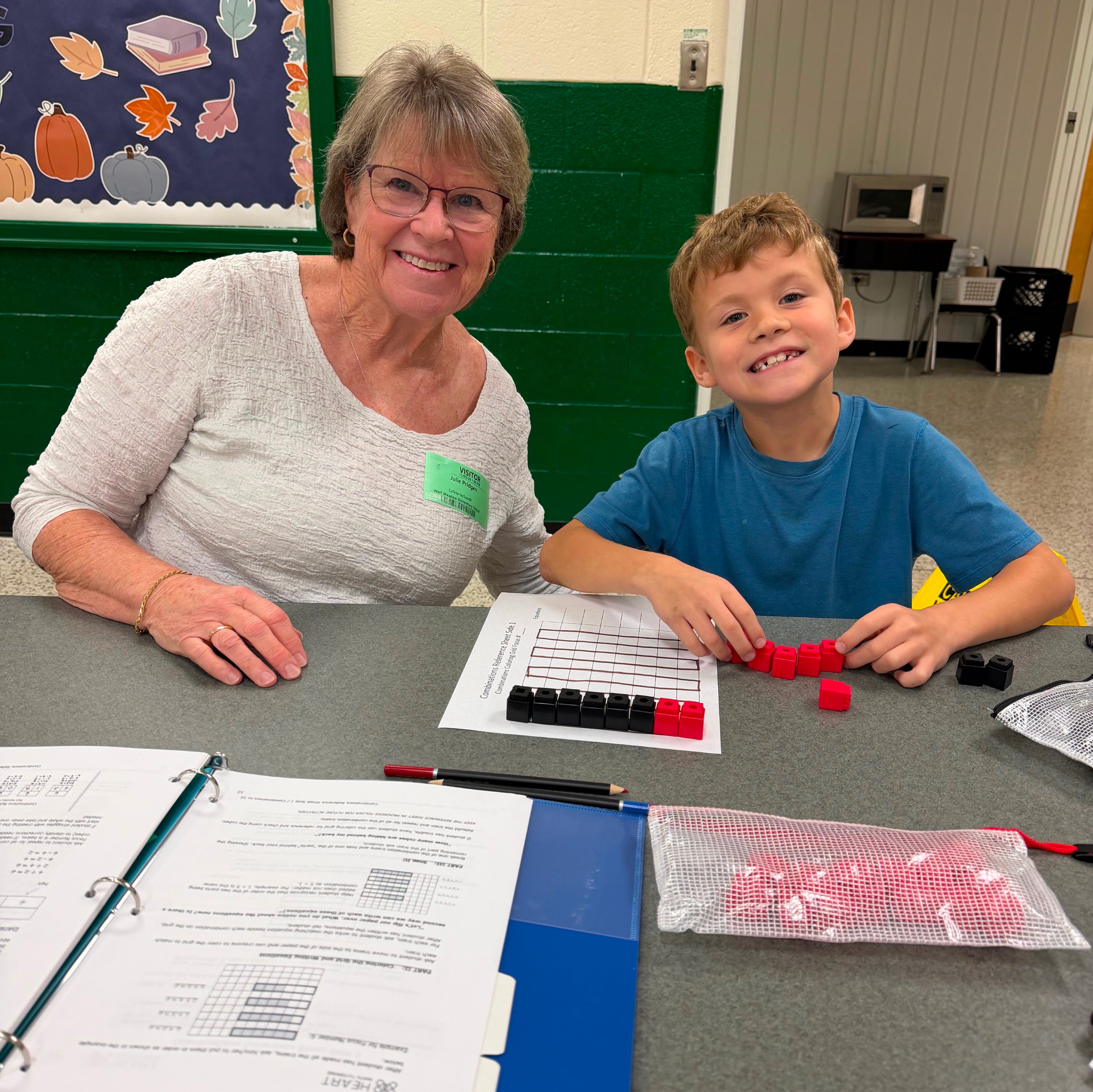
At Wolf Meadow, those results are still months away. But the early enthusiasm among students and volunteers has already offered encouragement to program leaders.
And perhaps no one expressed the appeal of Heart Math more simply than second-grader Jaxson Norton.
“I’m really learning, but it’s just really fun,” he said.
For more information about Heart Math Tutoring or to sign up as a volunteer tutor, contact Sydney Bray at sydney.bray@heartmathtutoring.org or visit the organization’s volunteer registration page.