

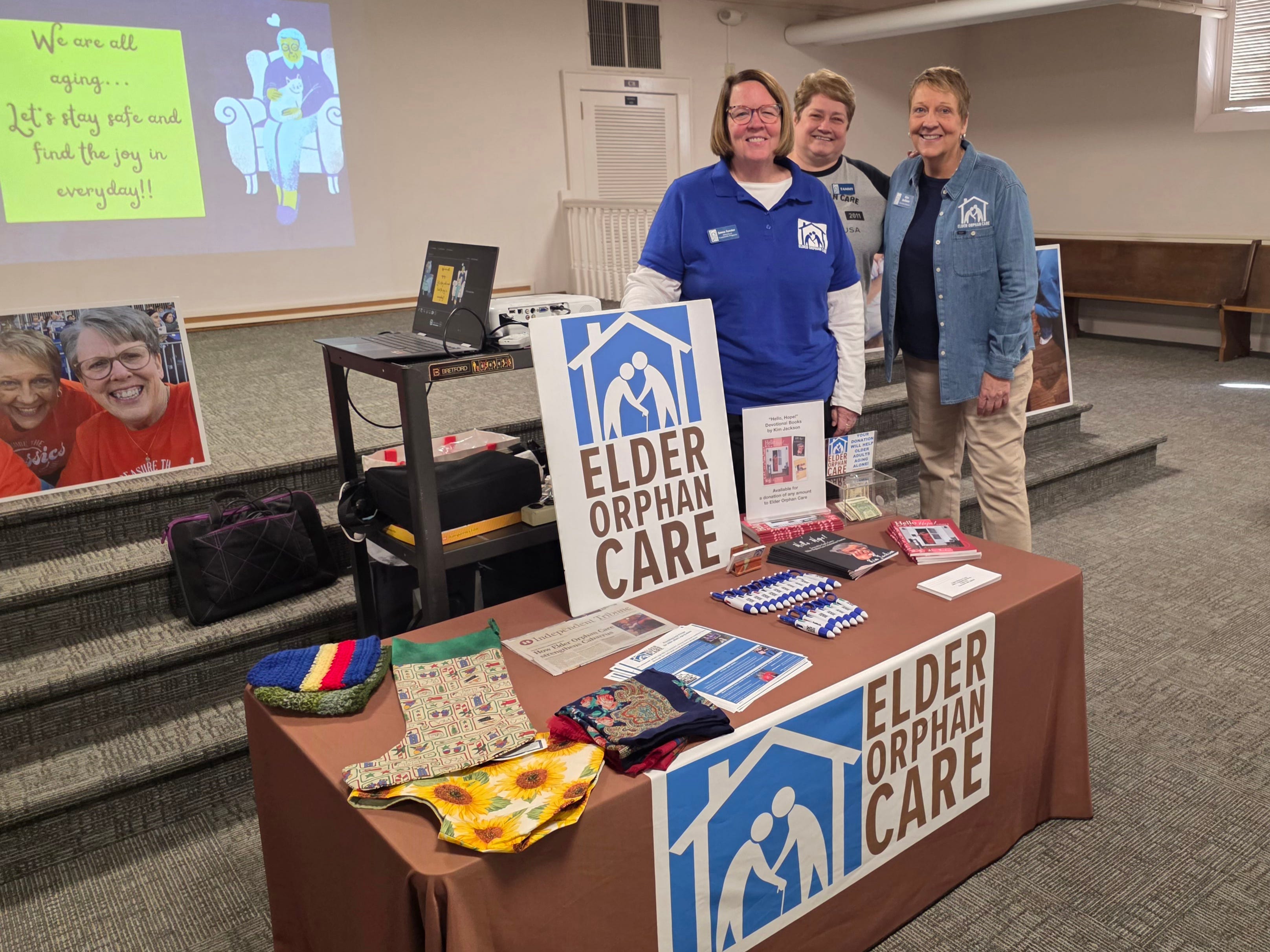
For Kim Jackson, years spent in youth ministry instilled a deep understanding of the power of human connection — and what it means to those who go without it.
Originally from Illinois, Jackson moved to Cabarrus County in 2007 and began working in an assisted living center, where she found purpose in serving what she calls “God’s older children.”
But her perspective began to shift in 2016.
After several years partnering with pastors in Romania to support homeless senior adults — helping fund housing, deliver supplies and organize care — Jackson realized a similar, largely unseen need existed much closer to home.
That realization led Elder Orphan Care — originally created to serve older adults in Romania — to formally establish itself as a 501(c)(3) nonprofit in January 2016, with a new focus on serving seniors in Cabarrus County.
Today, the organization provides help and hope to adults ages 60 and older who are aging alone or without adequate support — a population Jackson believes is too often overlooked. The organization still maintains ties to its roots, making one or two trips to Romania each year.
Now marking its 15-year anniversary — including 10 years serving Cabarrus County — Elder Orphan Care, which currently serves about 32 senior clients, many in their late 70s and early 80s, continues to focus on addressing isolation among older adults.
The name itself can sometimes cause confusion. While the term “orphan” is typically associated with children, Jackson said the concept applies just as strongly to older adults who lack family support or meaningful social connections — including those who are estranged from relatives or whose loved ones live far away.
“Our people who are considered elder orphans, there’s no cookie cutter,” said Jackson, founder and executive director of Elder Orphan Care. “None of them look the same.”
Still, she said, the common thread is clear.
“Isolation is isolation, and aging challenges are aging challenges,” Jackson said. “It’s a population that is overlooked and underserved, in my estimation.”
Through education, advocacy and a network of roughly 200 volunteers, the organization works to combat isolation and improve quality of life.
Volunteers help organize group events that bring seniors together, while a smaller group serves as one-on-one “buddies,” building consistent, personal relationships with older adults who may otherwise go days — or even weeks — without meaningful interaction. About a third of the seniors are paired with a buddy.
The buddy program is built around what Jackson describes as a “ministry of presence” — a commitment not just to provide services, but to show up.
Volunteers are paired with seniors for regular visits, phone calls and check-ins, offering companionship and emotional support while also helping identify practical needs. In some cases, that might mean assisting with errands or ensuring a home is safe. In others, it simply means sitting together, listening and sharing conversation.
“These relationships are where the real impact happens,” Jackson said. “It’s not just about what we do — it’s about being there.”
Valerie Polk has served as a volunteer buddy with Elder Orphan Care for three years. She meets several times a week with Wilma Jackson, who is in her late 70s, and the two have bonded over shared interests.
“When we first met, I found out we both enjoyed a lot of the same things, like sewing and needlework,” Polk said. Earlier this week, she took Wilma to Hobby Lobby to pick out supplies for a knitting project, and she has even made cat-themed curtains for Wilma’s kitchen.
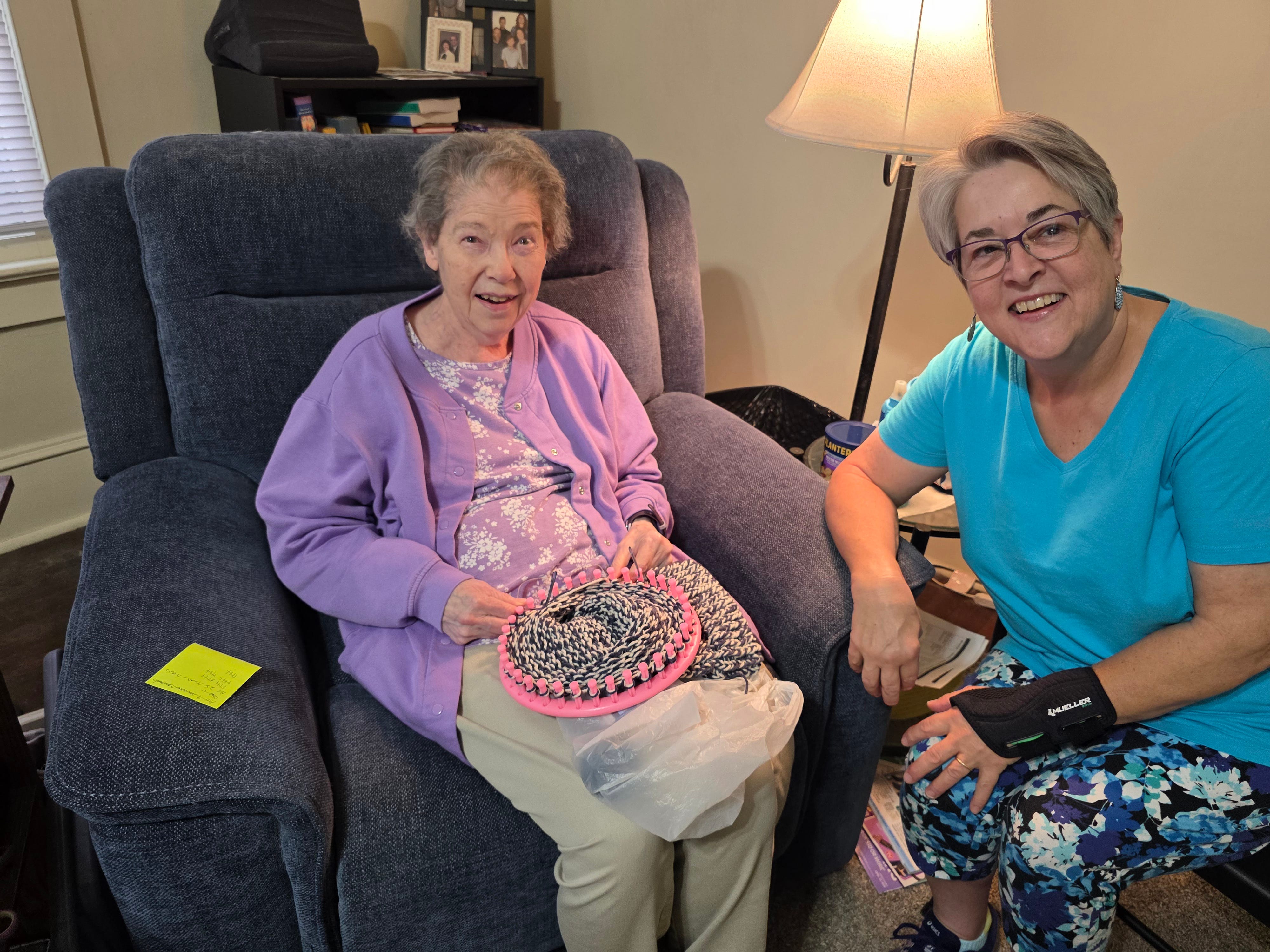
Wilma also has a longtime friend outside of Elder Orphan Care who helps with finances and other major needs.
“Wilma and I, we like to just play,” Polk said.
Polk said the organization’s leadership plays a key role in fostering those connections, noting that Jackson and her staff “have a gift for offering hope and friendship to so many senior citizens who are alone — and they make everyone feel special.”
For many seniors, relationships like the one Polk and Wilma share become a vital lifeline.
Volunteers often serve as an extra set of eyes and ears, helping connect individuals to resources, coordinate care or flag concerns before they become crises. But just as important, Jackson said, is the sense of dignity and belonging that comes from being known.
“We just feel like people have a purpose as a long as they have a pulse,” Jackson said.
Much of that work to improve the lives of senior adults is carried out through the organization’s “Safe and Loved at Home” program, which focuses on helping seniors remain independent while maintaining dignity and connection.
Services range from coordinating transportation to medical appointments and improving home safety, to delivering essential supplies and helping seniors navigate access to care.
Volunteers assist with medical advocacy and transportation, driving seniors to doctor’s appointments and, in many cases, accompanying them inside to help listen, ask questions and advocate for their care.
They may also help organize medications and ensure seniors understand what to take and when.
“We love that we can do that,” Jackson said.
The organization also creates opportunities for social connection — from gatherings and holiday celebrations to simple, consistent check-ins that can make the difference between isolation and belonging.
“We’re trying to help people stay in their homes and be safe and loved,” Jackson said.
Elder Orphan Care organizes a variety of social activities, often partnering with local churches to host summer gatherings and holiday celebrations.
Jackson said she especially values opportunities for intergenerational connection between senior adults and young people.
“One of our primary goals is to make sure the generations spend time together,” Jackson said.
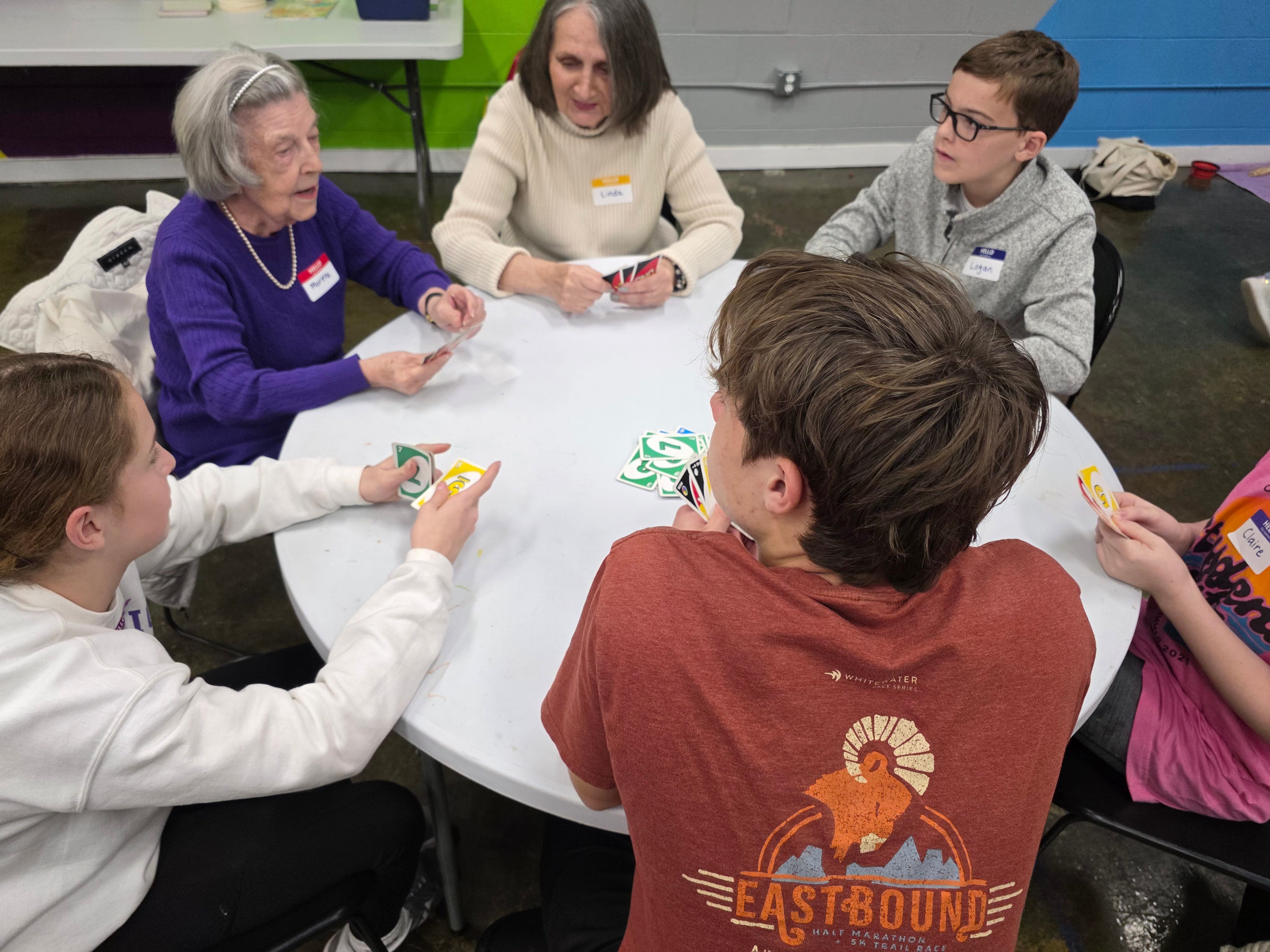
At One Life Church in Concord, a youth group recently invited seniors affiliated with Elder Orphan Care for an evening of pizza, Uno and crafts.
One of the seniors, who had spent decades teaching piano and organ, struck up a conversation with a teenager who was in the band. The two quickly bonded over their shared appreciation for classical composers, Jackson said.
“You had a 14-year-old and an 84-year-old having this conversation,” Jackson said. “You could just see her eyes light up because this kid was engaged with her.”
Another example, Jackson said, involves the grandson of a volunteer who regularly reads to a senior with limited vision.
“Something as simple as that is a game changer,” she said.
Elder Orphan Care receives referrals from a range of local partners, including churches, Atrium Health Cabarrus, Meals on Wheels and the Department of Social Services.
Before services begin, staff conduct an initial assessment with each senior to determine eligibility, focusing on those who are aging alone, lack nearby family support or have limited access to care.
The assessment evaluates home safety and includes screening for emotional well-being, such as measuring levels of depression. Once enrolled, clients are reassessed over time, and many show improvements in both mood and overall well-being.
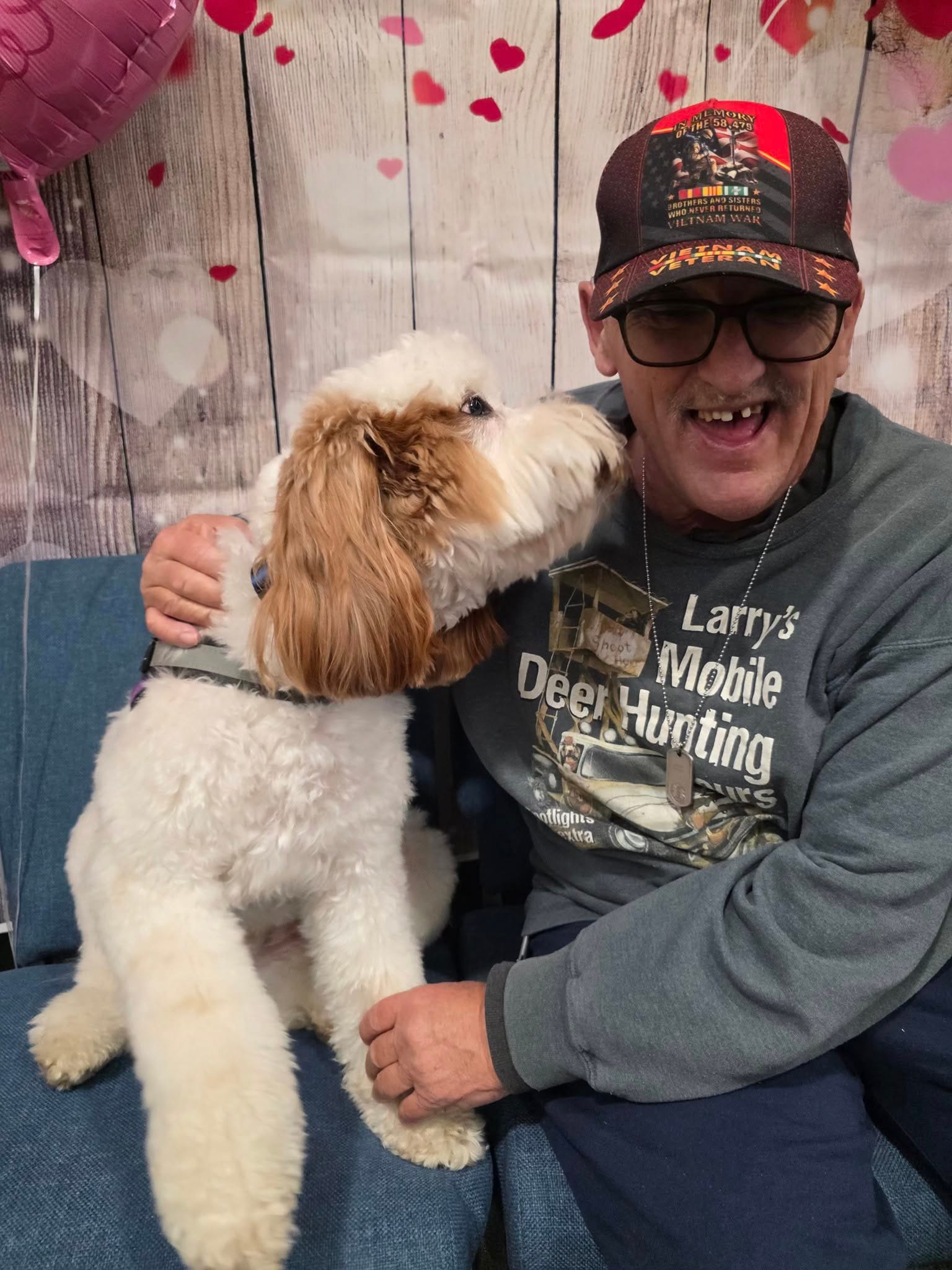
The need for senior adult services is only growing.
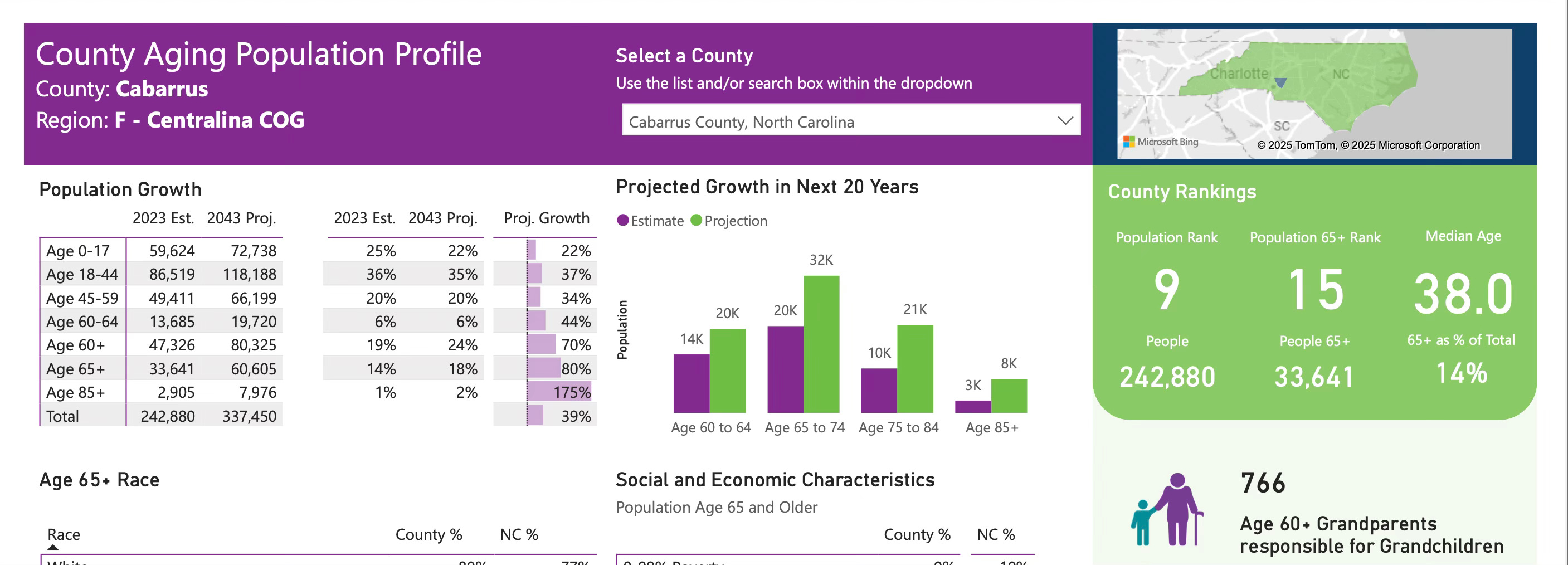
Roughly 14% of Cabarrus County residents are 65 or older, according to U.S. Census data. With the county continuing to experience rapid growth, that share is expected to rise in the coming years.
That number is expected to rise significantly in the coming years. County data projects the 65-and-older population will grow from about 33,600 residents in 2023 to more than 60,000 by 2043 — an increase of roughly 80%.
The fastest growth is expected among the oldest residents. The number of adults age 85 and older is projected to more than double during that time, rising from about 2,900 in 2023 to nearly 8,000 by 2043.
The trend extends beyond Cabarrus County. Across North Carolina, there were 3,781 centenarians — people age 100 or older — in 2025, according data from the state’s Division of Aging. That number is projected to surge to nearly 14,844 by 2050, a 293% increase.
At the same time, local data points to increasing vulnerability among older adults. While single mothers with children make up the largest share of the homeless population in Cabarrus County, senior adults represent the fastest-growing demographic, according to information from Cooperative Christian Ministry.
Jackson said the trend reflects a broader national shift.
Older Americans are projected to outnumber children within the next decade — part of what the U.S. Census Bureau has described as “the graying of America.”
“There’s no future in old people, but there’s sure a lot of old people in our future,” Jackson said. “And the world is aging faster than it ever has.”
That need isn’t limited to Cabarrus County.
Elder Orphan Care gained national attention last year after being featured in the November/December issue of the AARP Bulletin, which included a story on the growing number of “solo agers” in America.
Though the mention was brief, the impact was immediate. Jackson said she was quickly inundated with calls and messages from older adults across the country seeking help.
“I got voicemails from people saying, ‘I’m in Florida, I’m all alone,’” Jackson recalled. Some even expressed interest in relocating to Cabarrus County in hopes of finding support. “It was so heartbreaking.”
The response, she said, underscored both the depth of the need and the lack of comparable services.
Elder Orphan Care now draws support from donors in 24 states, Jackson said — a sign of the organization’s growing reach.
While other organizations provide support for older adults, Jackson said few take the same relationship-driven approach.
“Many don’t do it as relationally as we do or as deeply as we do,” she said. “I think we’re a unique gig.”
Still, Jackson believes the mission of Elder Orphan Care is ultimately about something simple — and deeply human.
“Wherever we serve older adults, our goal is to instill a deep sense of value and purpose in every life we touch,” she said.
Jackson and her small staff — Tammy Blackburn, director of development, and Janna Syester, director of community programs, both occupational therapists — along with a dedicated corps of volunteers, often go beyond meeting basic needs.
In some cases, that means helping fulfill long-held dreams.
The organization has arranged experiences such as a hot air balloon ride for one senior and a trip to Myrtle Beach for others eager to see the ocean again.
For Jackson, who will turn 70 next year, the most rewarding part of her work is seeing the impact the organization has on the lives of older adults.
“There’s nothing like being hugged by a 95-year-old and hearing her say, ‘I’ve never felt so loved in all my life,’” Jackson said.
As the organization looks ahead, Elder Orphan Care is working with The Greater Cabarrus Foundation on capacity building, board alignment, strategic planning, volunteer management and succession planning for when Jackson eventually steps aside.
Still, she said her passion for the work remains as strong as ever.
“There’s nothing I’d rather do than what I’m doing,” Jackson said. “And if God gives me the breath, I want to do this till the day I die.”
Chris, as VP of communications for a progressive Cabarrus Senior group, I want to thank you for being our "secret" program and events partner! Just when we are looking for an interesting guest to come and talk to our members, we simply keep up with Cabarrus Compass and there that person appears! Kim Jackson--if you're reading this--watch for an invitation soon! And thanks again, Chris, for great reporting on what we need to know about what's happening in Cabarrus County!
Chris, thank you so much for your interview and well-written article! All of us at Elder Orphan Care are grateful for it, and for your coverage of all important Cabarrus topics. Carry on!