

This story was largely adapted from a recent Barber-Scotia news release.
After years of uncertainty about the fate of its campus, Barber-Scotia College scored a major victory this week.
The North Carolina Property Tax Commission ruled that 14 contested parcels on Barber-Scotia’s campus qualified as educational use and were exempt from property taxes under state law — a decision that further solidifies the college’s efforts to stabilize financially and chart a path toward renewal.
The ruling overturns a 2023 determination by the Cabarrus County tax assessor, who concluded that much of the campus did not meet the threshold for tax-exempt status based on its use. Had that decision stood, the college would have faced an estimated $127,000 tax bill for that year, based on 2022’s tax rate. The commission directed the county to correct its tax records accordingly.
In its written decision, the commission affirmed that Barber-Scotia continues to qualify as an educational institution under state statute and that the properties in dispute were wholly and exclusively used for educational purposes during the relevant period.
In a statement, Barber-Scotia President Chris V. Rey called the ruling “an important affirmation of Barber-Scotia College’s mission, purpose, and future,” adding that the commission recognized the institution as “committed to serving students and the broader community, even as we rebuild, restore, and reimagine our campus.”
The dispute centered on multiple parcels within the college’s historic Concord campus — land that in recent years has become a focal point for questions about the college’s operational status and long-term plans. Testimony, documentary evidence and statutory guidance were weighed before the commission sided with the college.
The commission also clarified that “educational use” extends beyond classrooms to include student housing, dining and related facilities when made available for students, faculty and staff — an interpretation that strengthens the college’s position as it seeks to rebuild student-facing infrastructure.
The victory is part of the college’s ongoing rehabilitation under Rey, who has served as president since the summer of 2023. Last fall, Barber-Scotia enrolled more than 100 students for the semester, including about 75 who lived in on-campus housing for the first time in roughly a decade. The college also joined the New South Athletic Conference and, for the first time, fielded a football team.
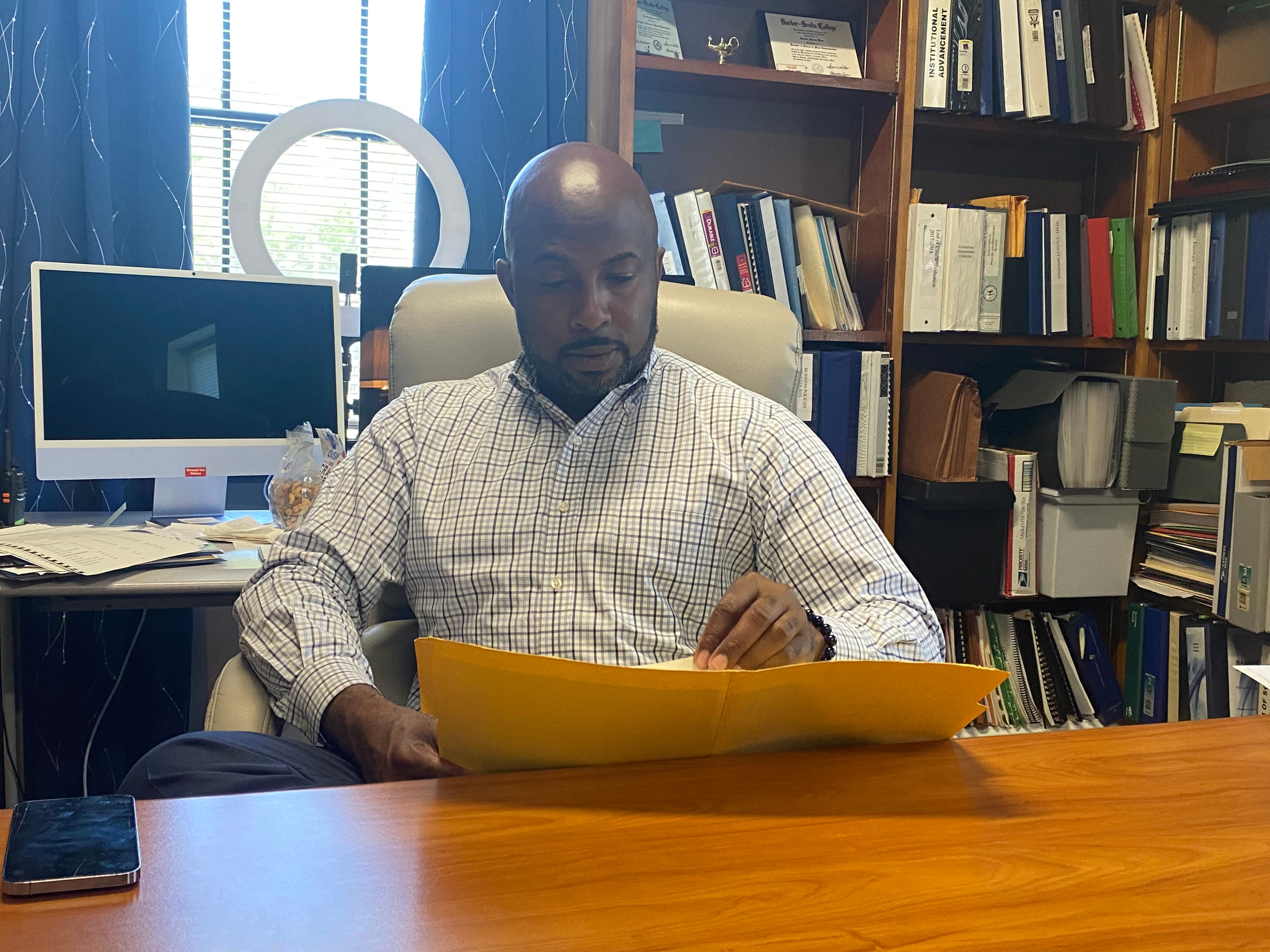
Rey said the exemption offers both financial and symbolic relief at a moment when Barber-Scotia is engaged in a broader recovery effort. “It allows us to redirect resources toward student success, workforce development, campus revitalization, and long-term sustainability,” he said.
Barber-Scotia has spent the past several years working to regain its footing following decades of enrollment decline, accreditation loss and physical deterioration.
The college has emphasized workforce and vocational programming, limited housing restoration and incremental enrollment growth as part of its strategy. Rey has also positioned the return of students to campus and the pursuit of accreditation as central to the institution’s future viability.
The ruling, while narrow in scope, removes a financial burden at a time when small private institutions — particularly historically Black colleges — face mounting capital and operational costs. It also offers a procedural win that reinforces Barber-Scotia’s claim that it continues to operate as an educational institution under state law, despite lingering public skepticism.
Founded in 1867 as Scotia Seminary for African American women, the institution merged and adopted the name Barber-Scotia College in 1932. Its charter was amended in 1954 to admit students regardless of ethnicity or gender.
A win for Cabarrus and the City of Concord. When we restore Barber Scotia, we restore our city and county. We all win. Thank you Dr. Rey, Barber Scotia staff, community members, and students and their families. A strong and vibrant Barber Scotia is a huge asset to our county.
Outstanding. Rising up is the only way to go. Peace.